Charcoal and graphite on paper
18 x 24 inches
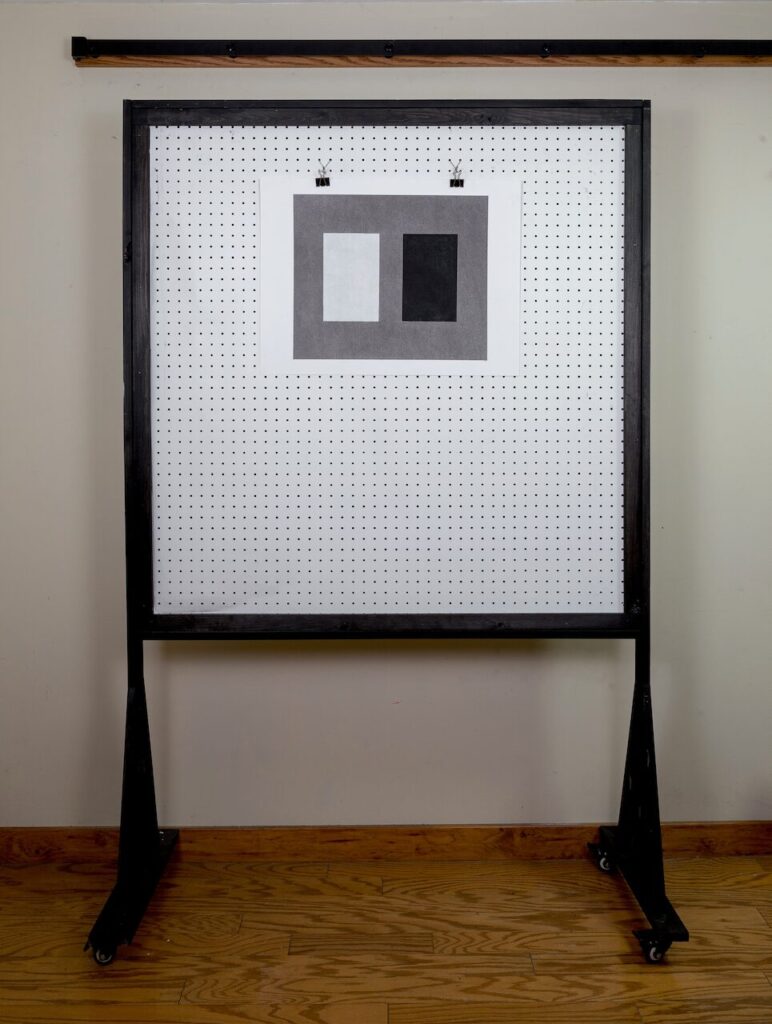
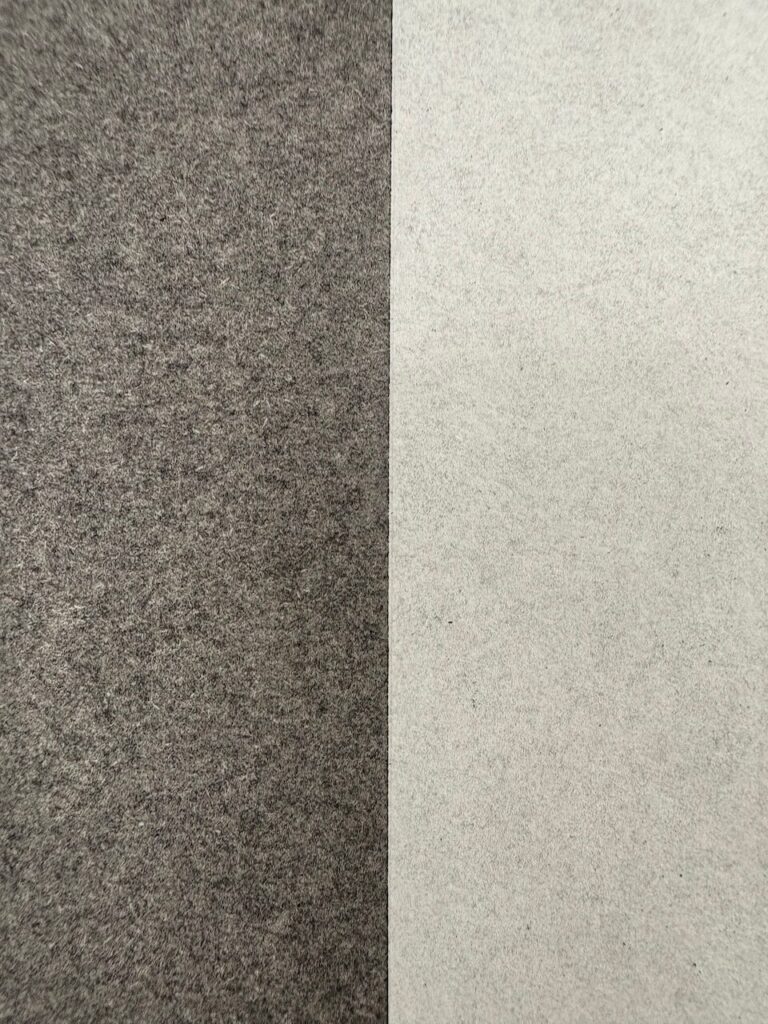
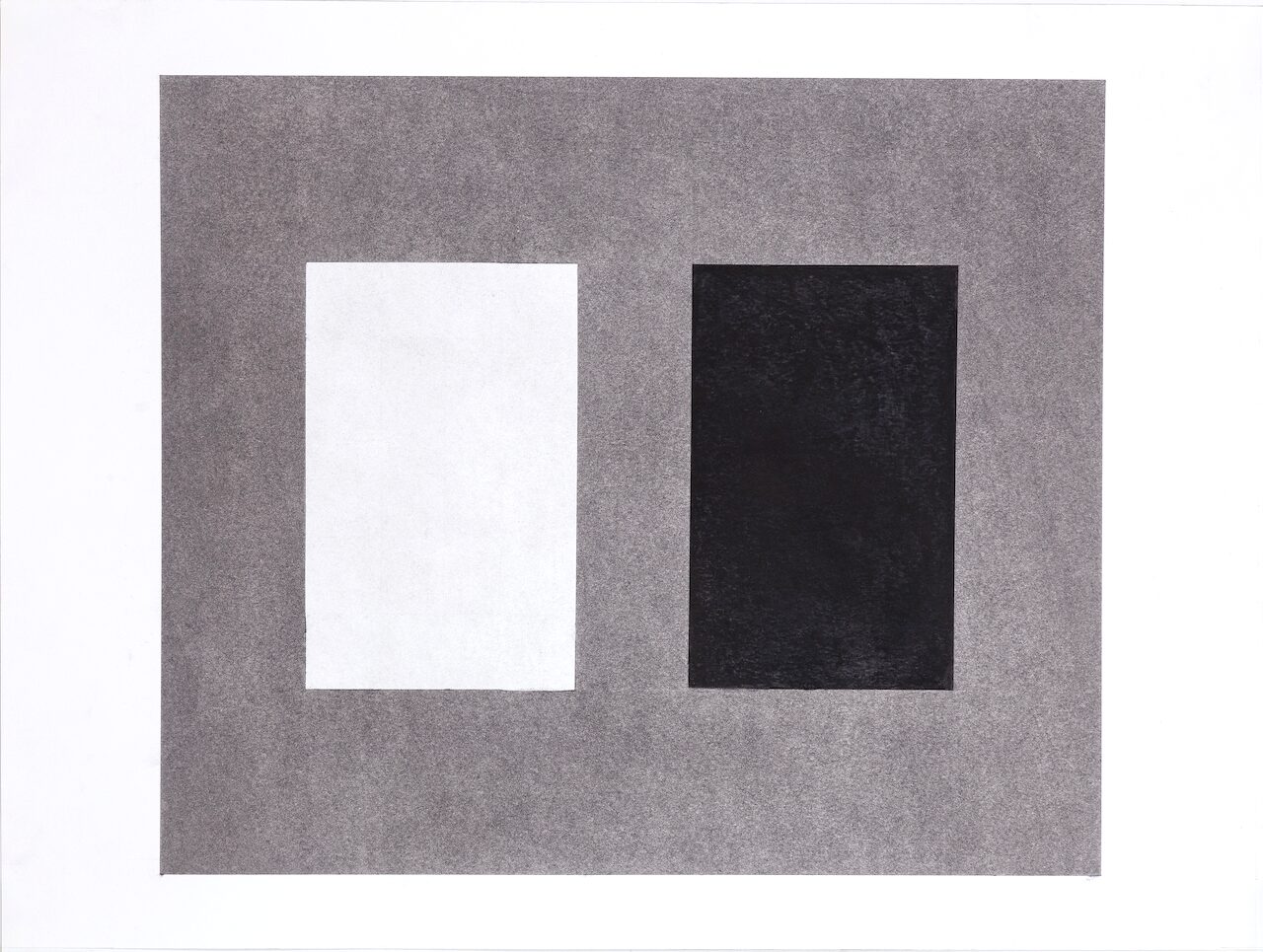
Rectangles, No. 1 is the first in a new direction of minimalist drawing. A thick white border encloses the drawing, slightly wider along the sides to create a forced, inward focus. A middle-gray charcoal ground applied with mechanical consistency fills the interior space. Within this field float two vertically oriented, large golden-ratio rectangles. Their tones are deliberately opposed: a cool faint graphite gray on the left and a warmer deep matte charcoal black on the right.
This drawing was one of my first fully realized abstract minimalist works, beyond early sketches. This work emerged from a period of stripping my drawing practice back to fundamentals and primary building blocks. After months of studying and copying Bargue plates, my focus shifted to applying the same principles of material, technique, and tonal shape to simple graphic elements rather than modeled representational forms. At the same time, I began exploring Gothic and Renaissance compositional techniques including the early fascination with the mathematically derived layouts and the golden ratio in particular.
The composition is highly measured. The two rectangles are vertically centered and equidistant from the gray field’s left and right edges, but set closer to each other along the central vertical axis. These spatial differences heighten the interplay of balance and tension — tension between their tonal contrast against each other and the ground; in the the narrow space compressed between them and the space which surrounds them.
Minimal elements carry significant weight. Every placement, proportion, and tonal shift has been chosen to sustain equilibrium while keeping the viewer’s eye engaged in subtle push and pull. The drawing is both analytical and referential: its rigor and restraint pay homage the work and lessons of Itten and Albers, while its spare, abstract language situates it within the vernacular of minimalist art.